Champagne · Terroir · Wine

Champagne
Uncle

Supporting Crystal Wine Group  ·  Growing Chardonnay  ·  Pouring Stories

Crystal Wine Group Les Clefs de Cristal Yangjae Bau Vineyard Chardonnay
Scroll
Champagne Uncle
Champagne Uncle
Champagne Lover and Grower · Curator
Seoul, Korea Champagne Chardonnay Terroir
About

A life poured into
every glass

I didn't set out to become a champagne person. It happened the way most meaningful things do — gradually, then all at once. The first time a glass of real grower champagne landed in my hand, something clicked. Not just the bubbles. The story behind them.

Today, I support Crystal Wine Group — a community built around the belief that great wine deserves great people. Whether it's sourcing, introducing, or simply sharing, the mission stays the same: bring the right bottle to the right table.

At Les Clefs de Cristal Yangjae, we've built a space where champagne doesn't need a special occasion. Come as you are, open something interesting, and let the wine do the talking.

And at Bau Vineyard, I'm doing something I never imagined — growing Chardonnay on Korean soil. The vines are young, the ambition is not. Every season teaches something new about patience and terroir.

3
Active Ventures
200+
Maisons Explored
Bottles to Open
What I Do

Three ways I live
in wine

🏛️
Crystal Wine Group
Supporter
Supporting one of Korea's most thoughtful wine communities. Crystal Wine Group brings together collectors, sommeliers, and enthusiasts who take wine seriously — without taking themselves too seriously.
🥂
Les Clefs de Cristal
Yangjae, Seoul · Wine Bar
A sanctuary for those who speak the language of wine. Specialising in Champagne and Burgundy, Les Clefs de Cristal is where connoisseurs and curious minds gather — united by a shared devotion to the finest bottles France has to offer.
🌿
Bau Vineyard
Korea · Chardonnay Grower
Growing Chardonnay at Bau Vineyard — the long game. Korean terroir is underestimated. We're proving that with patience, the right variety, and a little obsession, something remarkable can grow here.
Personal Cellar

Champagnes that
changed everything

Chardonnay
Blanc de Blancs · Côte des Blancs
01
Jacques Selosse
Substance · Avize Grand Cru
The champagne that redefined everything. Oxidative aging, solera system — hazelnut, roasted brioche, honeyed apricot, dried white blossoms. Not just a wine. A statement.
RM · Blanc de Blancs
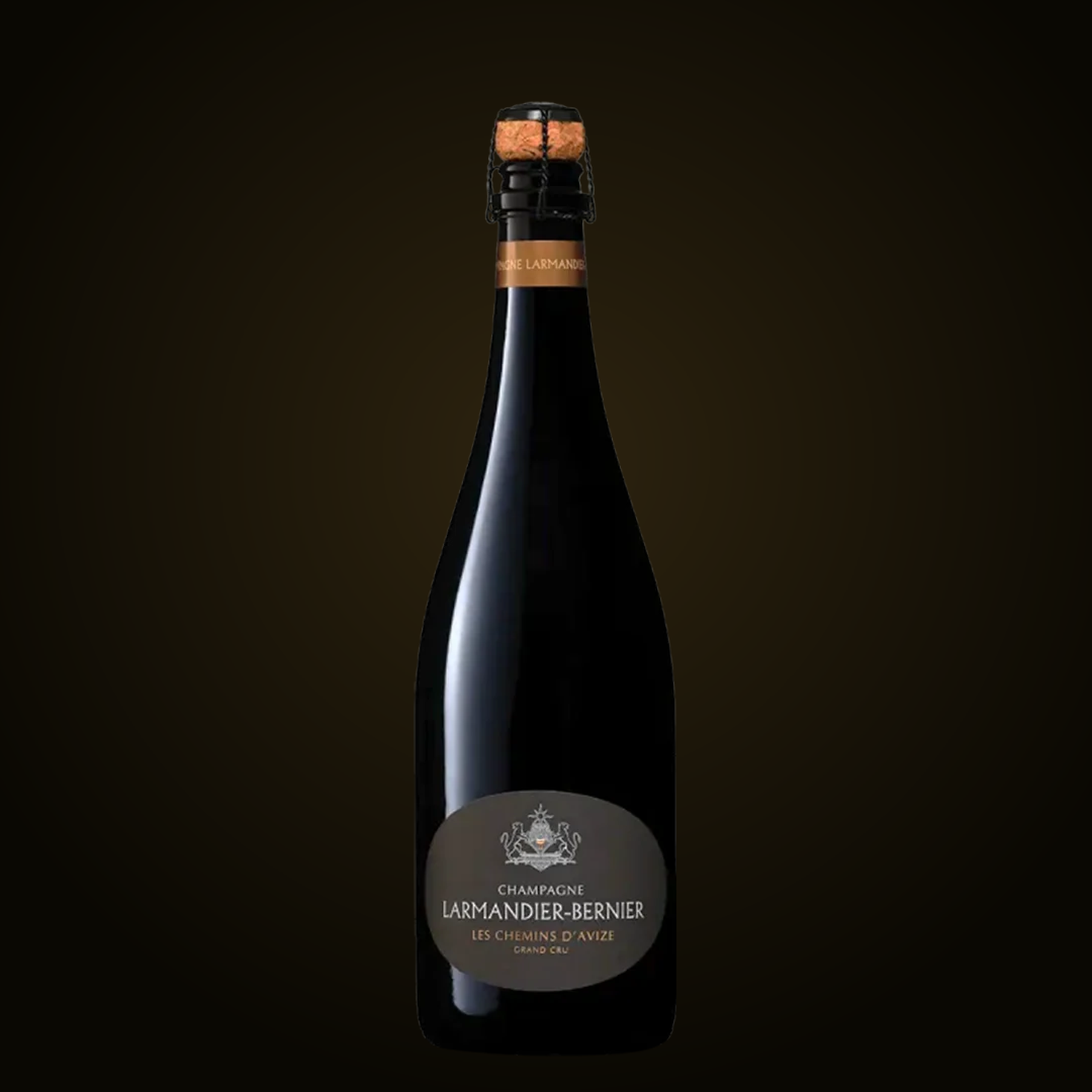
02
Larmandier-Bernier
Terre de Vertus · Vertus 1er Cru
Biodynamic pioneer. Non-dosé. Lemon zest, herbs, chalk. Fifteen hectares farmed with absolute conviction. Nothing added, nothing taken away — pure terroir.
RM · Biodynamic · Non-Dosé
03
Pierre Péters
Cuvée de Réserve · Le Mesnil-sur-Oger
The chalk of Le Mesnil in its most honest form. Lemon zest, white peach, flinty minerality — a precision that makes you want to learn geology.
RM · Blanc de Blancs · Grand Cru
Pinot Noir
Montagne de Reims · Vallée de la Marne
04
Henri Giraud
Hommage au Pinot Noir · Aÿ Grand Cru
A symphony of power and finesse from the Grand Cru of Aÿ. Red berries, toasted brioche, pink grapefruit, subtle oak from Argonne forest barrels. Deeply vinous.
RM · Blanc de Noirs · Grand Cru
05
Egly-Ouriet
Grand Cru Brut · Ambonnay
Low yields, long aging — this is what Ambonnay Grand Cru Pinot Noir really means. Wild strawberry, dark cherry, earth, spice. Heavy, honest, unforgettable.
RM · Grand Cru · Ambonnay
06
Bollinger
Special Cuvée · Aÿ
60% Pinot Noir, aged in oak. The House of Aÿ's purest expression — roasted apple, peach, red fruit, fine mousse. Power and elegance in perfect balance.
Grand Maison · Pinot Noir Dominant
Pinot Meunier
The Forgotten Grape · Rediscovered
07
Jérôme Prévost
La Closerie Les Béguines · Gueux
2.2 hectares of old-vine Meunier, 1950s massale selection. Amber gold, field blend energy — stone fruit, floral lift, earthy depth. One of grower champagne's most revered names.
RM · 100% Pinot Meunier
08
Benoît Déhu
Initiation · Vallée de la Marne
Zero dosage, no malolactic, oak-fermented Meunier from a perpetual solera. Toast, cream, toffee, remarkable persistence. A studious reimagining of a misunderstood grape.
RM · Zero Dosage · Solera
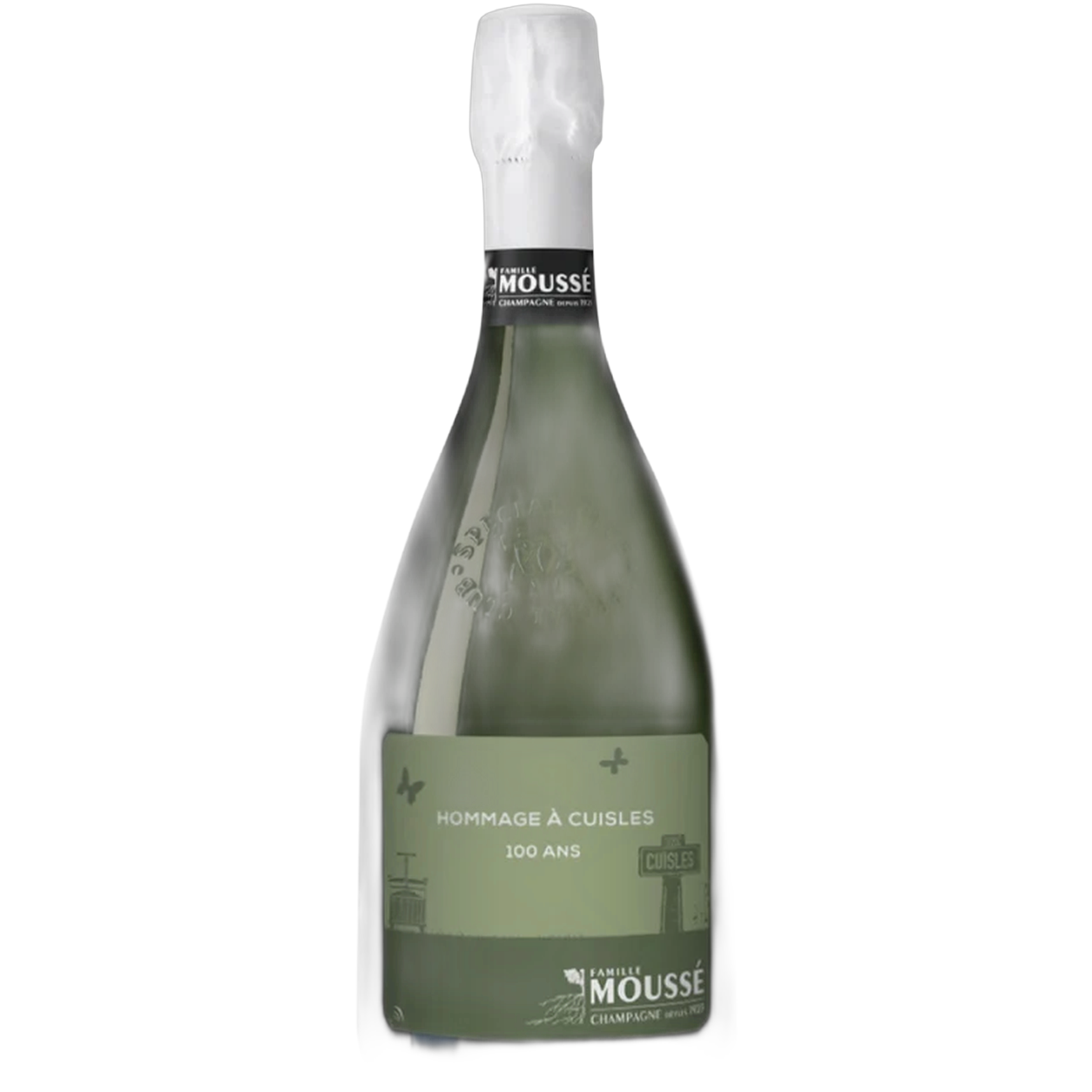
09
Moussé Fils
L'Or d'Eugène · Cuisles
A perpetual reserve spanning decades — 80% Meunier, 20% Pinot Noir. Poached pear, apple, mineral backbone, extraordinary length. Meunier finally given its crown.
RM · Perpetuelle · Blanc de Noirs
Philosophy
"Champagne isn't about celebration.
Celebration is about champagne."

— Champagne Uncle

01
Read the Terroir
Every glass is a geography lesson. Where the vines grow, what the soil holds, how the year unfolded — once you read terroir, you can't unread it.
02
Drink with People
The best bottle I ever opened wasn't the most expensive. It was the one shared with the right people at the right moment. Wine is a social language.
03
Grow Something
There is no shortcut to understanding wine like tending vines yourself. Bau Vineyard isn't a business. It's a classroom with roots in the ground.
Wine of the Month

Monthly Picks
by Champagne Uncle

Weekly Report

Field Notes &
Dining Dispatches

Sosuheon — Chef Kyungjae Park
Dining Dispatch · August 2026

Sosuheon

The Art of Balance — Chef Kyungjae Park's Gastronomy

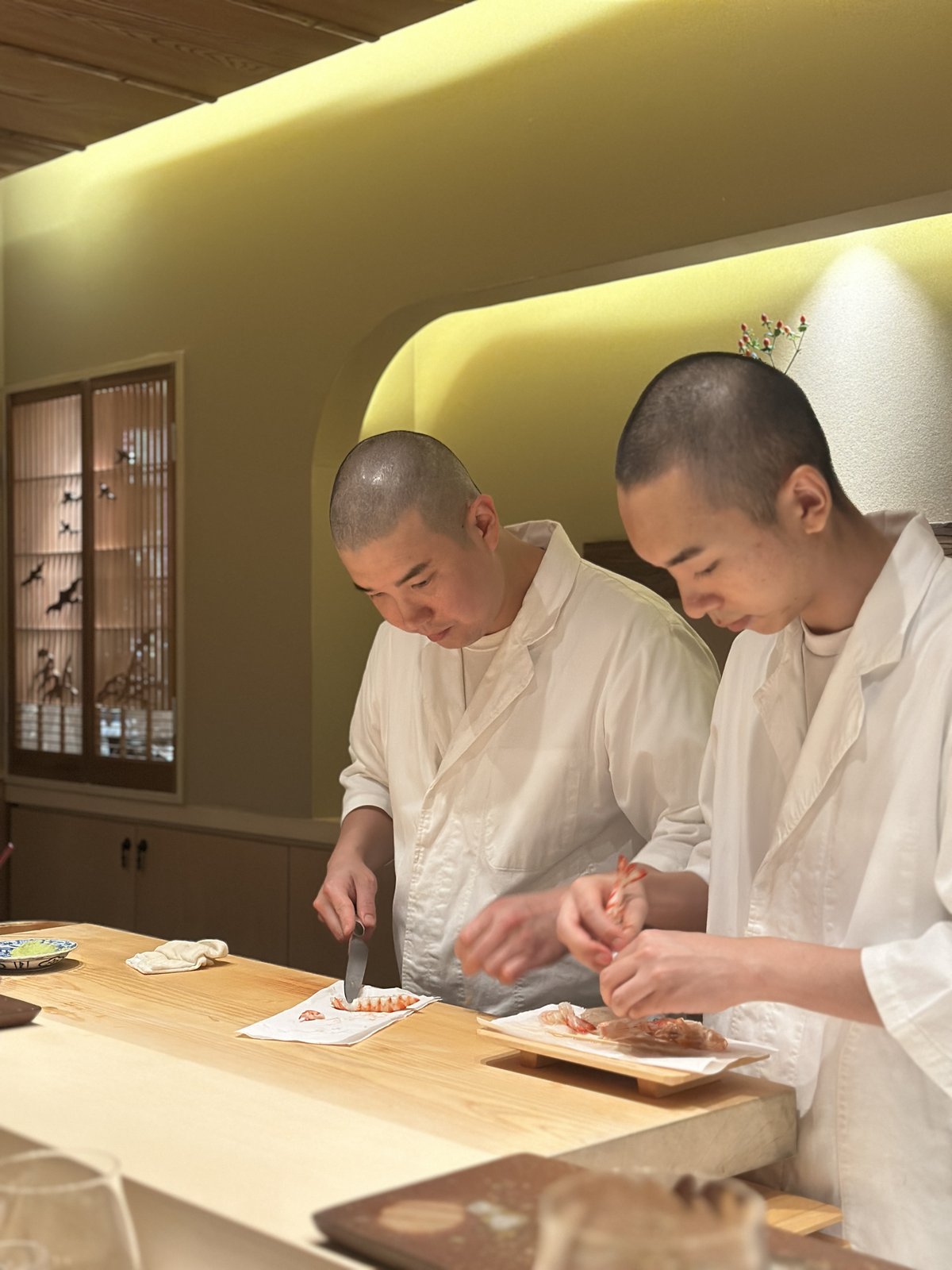
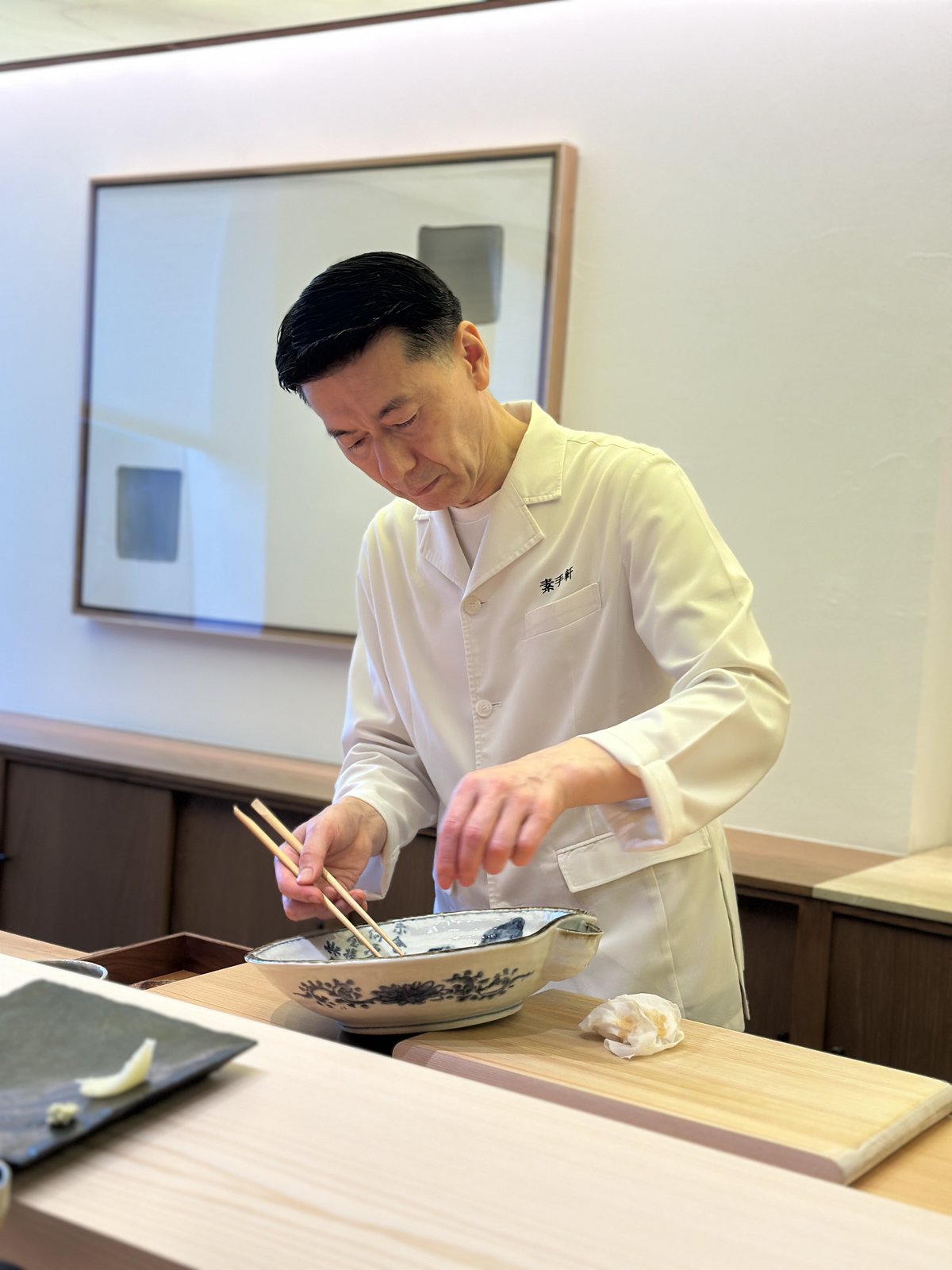
What I felt most acutely at Sosuheon — the recently crowned Michelin two-star — was the philosophy that Chef Kyungjae Park has spent a lifetime building. Over more than thirty years devoted entirely to sushi, through the Shilla Hotel and Kojima before opening his own space, he led Korea's first Michelin two-star sushi at Kojima and received the Michelin Mentor Chef Award in 2023. Sosuheon's own ascent to two stars this year is confirmation that his philosophy remains as vital as ever.

That impression arrived with the very first tsumami. Each seasonal ingredient was read with precision — umami present but never excessive, salinity calibrated to awaken the palate without overwhelming it, acidity functioning like negative space between courses. Nothing jutted forward; everything supported everything else. What struck me was not the ability to add flavour, but the ability to edit it.

Moving into the nigiri, that delicacy became even more pronounced. The neta was captured at its precise peak. The shari — warm, correctly salted, dissolving with a gentle give — existed not to assert itself but to make the fish more vivid. The technique Chef Park has refined over decades manifests not as spectacle but as a balance so natural the diner barely registers it. Michelin describes Sosuheon as a place where "the refined touch of a master who quietly focuses on forming each nigiri" defines the experience — and sitting before the counter, that description felt exactly right.

One particularly memorable moment was the lobster with truffle. It is a combination where truffle can easily colonise every other flavour, but here it did not. The sweetness and yielding texture of the lobster remained at the centre; the truffle was given the role of layering fragrance, nothing more. Luxurious ingredients were deployed, yet the ingredient itself remained the subject. The ability to allow each element its own character while resolving them into a single coherent flavour — this was perhaps the purest expression of Chef Park's gastronomic thinking on a single plate.

What lingered longest after the meal was the word restraint. Many restaurants reach for intensity to produce surprise. Sosuheon never loses its balance. Umami, salinity, acidity, temperature, aroma, texture, the arc of the course — every element is fitted together with the precision of joinery, continuing like a single unbroken narrative. That balance is harder to achieve than spectacle: Chef Park demonstrates this quietly, and overwhelmingly.

A Michelin two-star does not mean a single outstanding dish. It means a restaurant that sustains a high level of accomplishment across an entire course while communicating a chef's philosophy with consistency. Sosuheon made that standard feel entirely self-evident.

In the end, what was most delicious at Sosuheon was not any single dish. It was the balance that Chef Kyungjae Park never once let go of — from the first bite to the last.

Seoul Sushi Michelin ✦✦ Omakase Fine Dining
Mingles — A Night for Wine
Dining Dispatch · August 2026

Mingles

Finding a Place to Drink Wine — A Night at Mingles

Finding a place to drink wine isn't simply a matter of choosing somewhere to open a bottle. It means finding a place where the food is good, where it doesn't get in the way of the wine — and where, sometimes, it draws out the wine's full potential. On this particular night, that place was Mingles.

We brought one bottle ourselves; the rest we ordered from the menu, exploring as the evening unfolded. And those choices came naturally. As glasses changed, plates arrived, and the pace of conversation gradually slowed, the food at Mingles made its presence known — clearly, without exaggeration.

What struck me most was the harmony. Multiple layers were unmistakably present, yet none pushed forward to disrupt the whole. The flavours ran deep, the textures were delicate, and the aromas accumulated in quiet layers. Complex without being difficult, refined without being excessive. It is rare to find a dining experience where the word "balance" rises so naturally to mind.

Another pleasure was the unrepetitive rhythm. Rather than demonstrating consistent mastery through a single approach, the intention seemed to be giving guests as wide a range of flavour and texture as possible. Soft and sharp, warm and cool, the familiar and the unexpected — each plate arrived in a different register, so the meal felt less like a conventional course and more like a well-edited sequence of scenes.

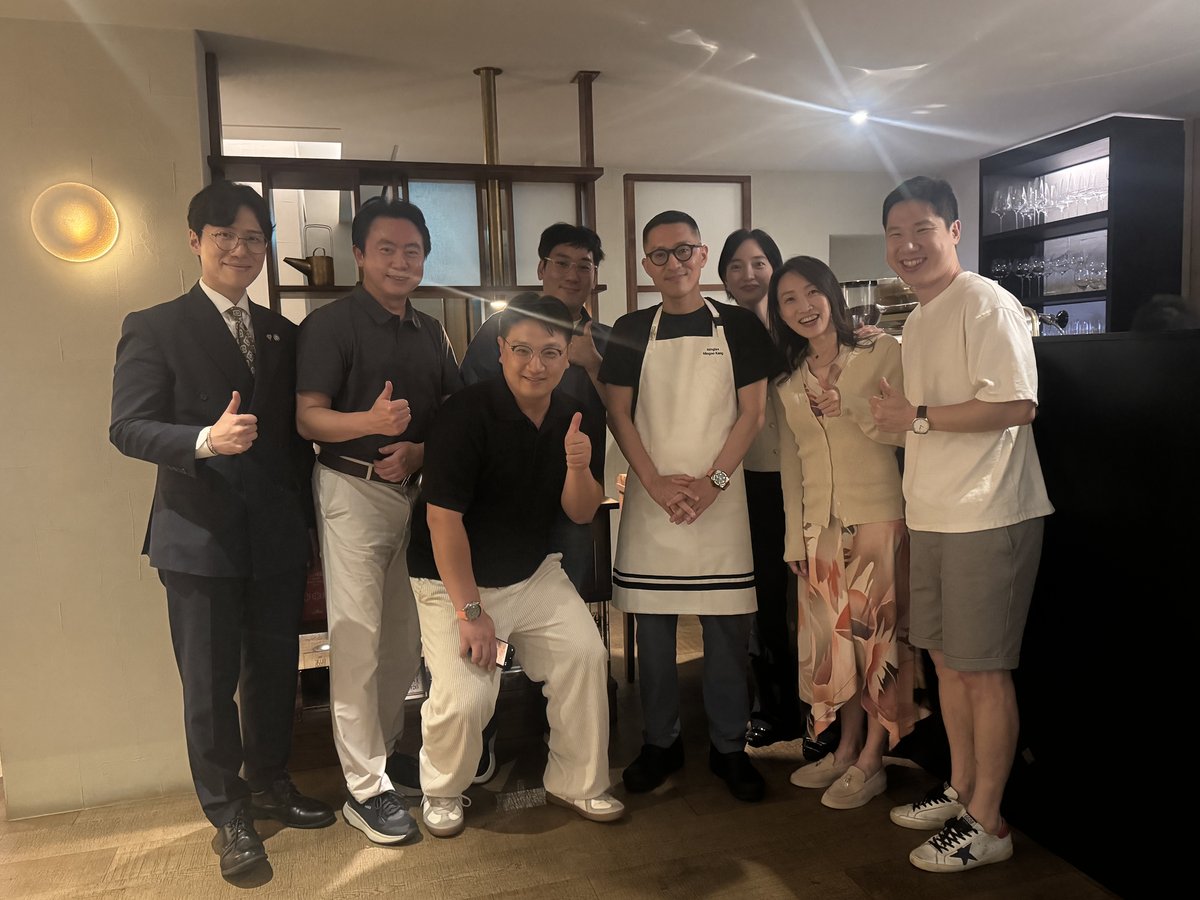
What made it especially memorable were the dishes that felt genuinely new to the dining scene — flavours I hadn't encountered before, yet rendered with a conviction that made them immediately persuasive. Behind that lay the passion and curiosity of Chef Mingoo Kang. He starts from a foundation of familiar Korean sensibility, then pushes it one step further, translating it into a language that is distinctly Mingles.

The service moved like water. Present when needed, receding when not. The hospitality was genuinely warm — the temperature of the glass, the atmosphere of the table, the intervals between courses all stitched together seamlessly. There was a comfortable tension that only the finest restaurants seem capable of producing.

We came for the wine. We left remembering the restaurant. A night that began as a search for somewhere to drink became, in the end, a reminder of how elegantly great food, great service, and one chef's singular world can align. One more reason to return — and to bring another bottle.

Seoul Fine Dining Michelin Wine Pairing Korean Cuisine
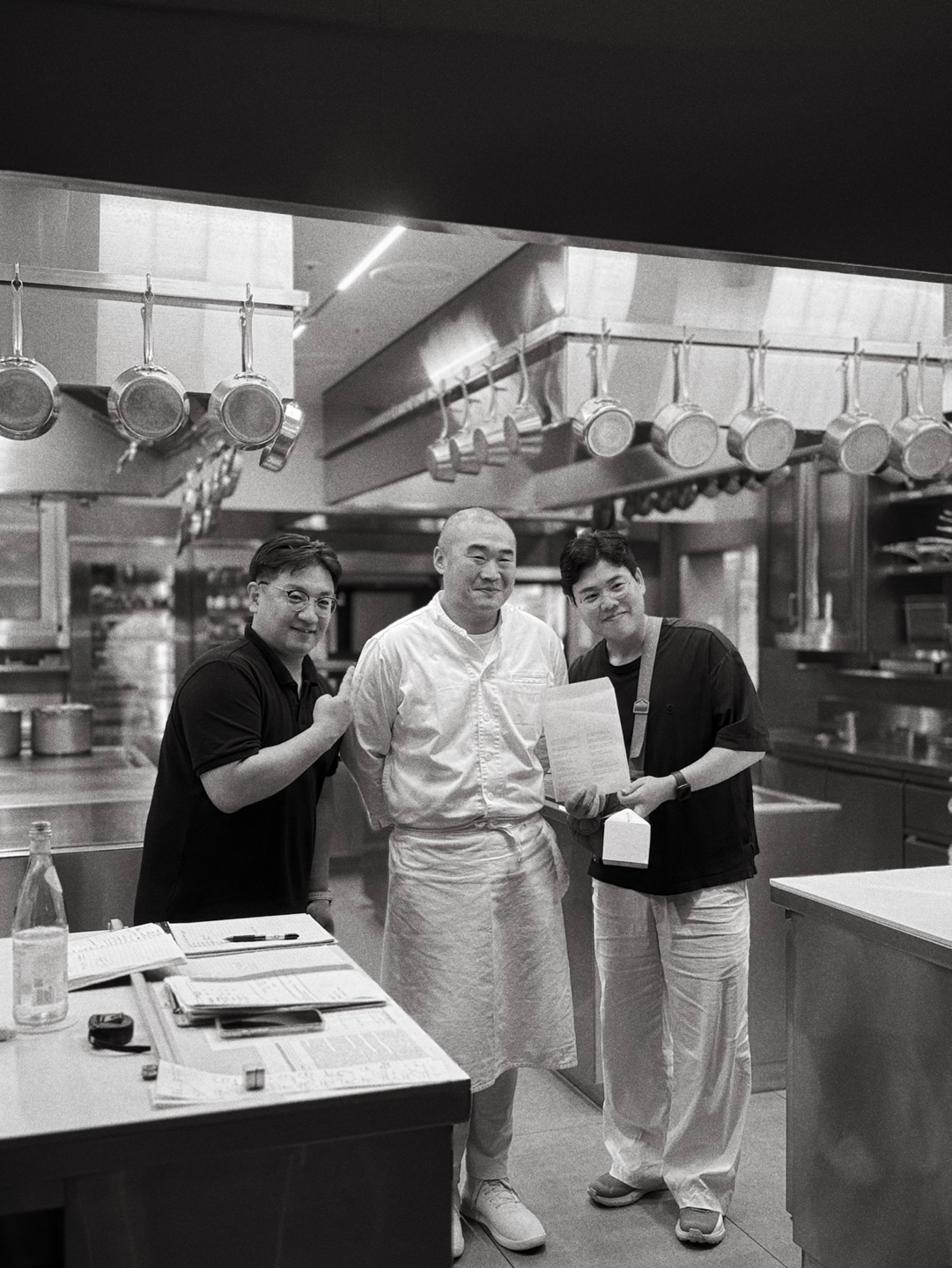
Restaurant SAN — Chef Seunghyun Cho
Restaurant Report · July 22, 2026

Restaurant SAN

From the World's Kitchens, Back to the Taste of Korea

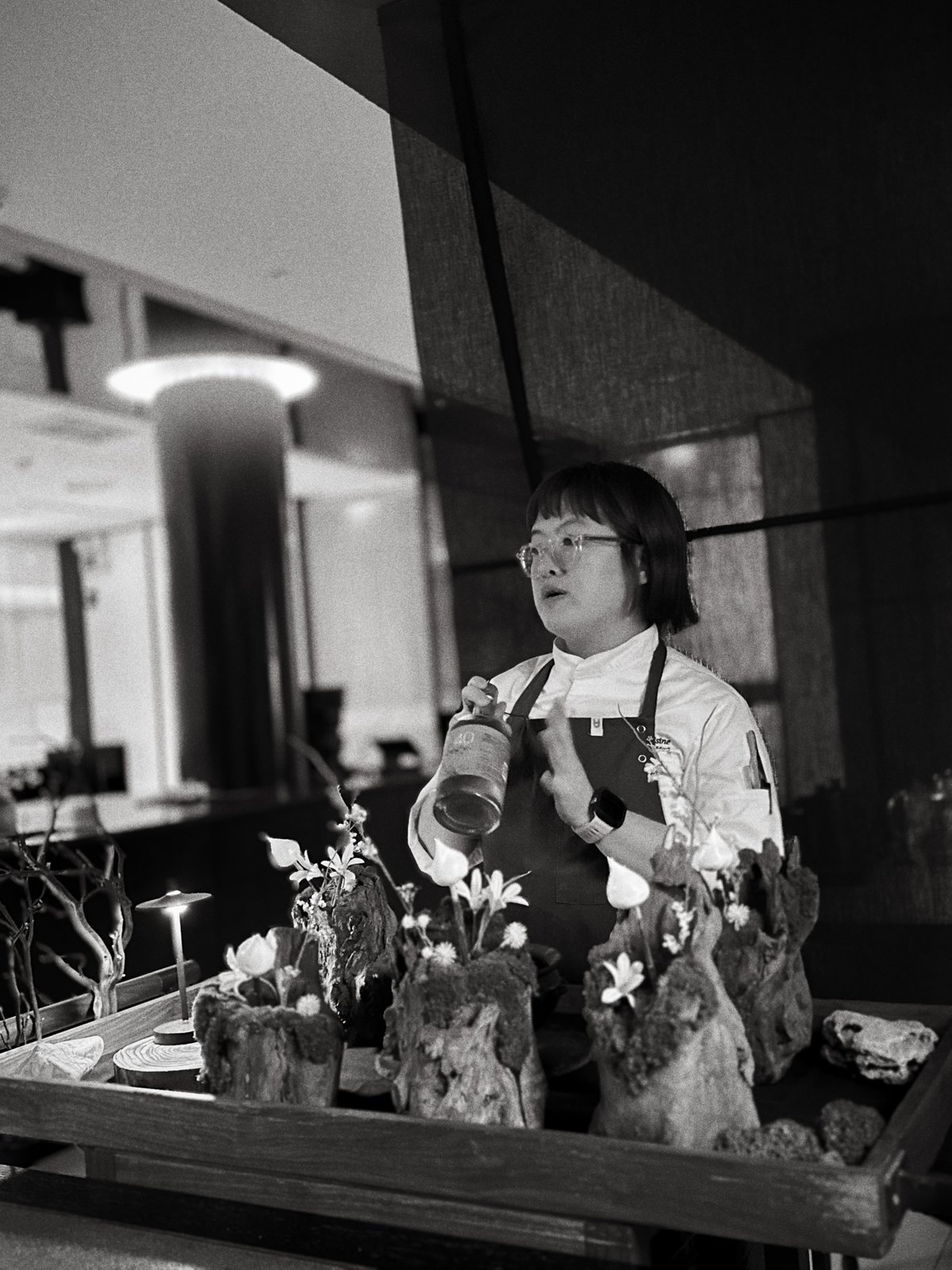
On July 22nd, I sat down to experience the summer menu at Restaurant SAN. At the heart of this Michelin-recognised destination is Chef Seunghyun Cho — a Korean-born cook who spent years refining his culinary language in the world's most demanding kitchens before returning home.

His résumé reads like a pilgrimage through fine dining's inner sanctum: The French Laundry in Napa Valley, Troisgros in Roanne, Piazza Duomo in Italy, and Geranium in Copenhagen. He then made his way to San Francisco, joining Chef Corey Lee at the three-Michelin-starred Benu, where he spent roughly eight years as Chef de Cuisine.

Benu is a restaurant that interprets the flavours of Korea, China, and East Asia through the precision of Western fine dining. Working there, Chef Cho didn't simply acquire technique — he learned how to translate the taste of one culture into the language of another. That foundation of classical French rigour and deep East Asian sensibility is what underpins everything SAN stands for today.

He returned to Korea and opened his first independent restaurant in 2024. SAN is not a showcase for what he learned abroad — it is closer to a personal reckoning: after years away, a careful re-examination of Korean flavour through his own eyes and hands.

Two currents run through the food simultaneously. The first is the precision absorbed from world-class kitchens — the calibration of sauce density and temperature, the contrast of textures, the deliberate arc of flavour within a single plate. The second is the Korea lodged in his memory: jeotgal, dongchimi, milmyeon, dwaeji gukbap. Both are present, and neither overwhelms the other.

The Michelin Guide describes SAN as a restaurant that pairs the intensity of seasonal ingredients with complex sauces while maintaining restrained balance. It singles out the abalone jang, tofu flower, and pork gukbap as signature expressions of Chef Cho's imagination and Korean interpretation. That direction was unmistakable in the summer course.

The meal opens with the coolness and bright acidity of summer produce, then builds gradually — through the umami of seafood, the depth of fermentation, and the warmth of meat and fire — without ever becoming heavy. The sauces are layered but never mask the ingredient. The technique is evident but never intrudes. You sense the years in America and Europe, but every dish ultimately resolves toward Korea.

The space suits the name perfectly. Tucked underground, the restaurant is insulated from the city above. Inside, the architecture echoes forests and ridgelines — tree-ring textures, restrained lighting, dark tones — creating a quiet that allows the food and wine to hold the room.

In 2026, SAN received the Asia's 50 Best Restaurants One To Watch Award — recognition for a restaurant still early in its journey, yet already carrying the weight of everything Chef Cho accumulated across the world's great kitchens.

A chef who spent years in the world's finest kitchens, finally returning to the taste he was always moving toward. The summer at Restaurant SAN felt like both a record of the distance he has travelled and a clear signal of where he intends to go.

Seoul Fine Dining Michelin Asia's 50 Best Korean Cuisine
Follow Along

Daily champagne
dispatches

One maison a day · Grower RM spotlights · Wine & food pairings · Vineyard updates from Bau